Key Takeaways
- Outdoor kitchens extend living space and elevate your home’s entertainment potential.
- Functionality begins with smart planning of work zones, durable materials, and proper utilities.
- Style should reflect your lifestyle, from sleek modern designs to rustic comfort.
- Prioritize weather-resistant appliances, lighting, and storage for long-lasting enjoyment.
- Thoughtful layouts and features can transform an outdoor kitchen into a year-round gathering spot.
Outdoor kitchens are no longer a luxury — they are a lifestyle upgrade. Whether you’re hosting weekend barbecues, enjoying a quiet morning cup of coffee, or entertaining friends well into the evening, a well-designed outdoor kitchen expands your living space and enhances the value and functionality of your Bay Area home.
Designing an outdoor kitchen that’s both functional and stylish takes thoughtful planning, especially when you consider materials, appliances, layout, and personal flair. Let’s explore how to build a space that feels effortless to use and beautiful to experience.
Why Invest in an Outdoor Kitchen?
An outdoor kitchen In Danville CA elevates everyday living in several meaningful ways:
- Extended living space: Adds a usable “room” without walls.
- Entertainment hub: Keeps guests comfortable and engaged while you prepare meals.
- Increased property value: Outdoor upgrades are often key differentiators in resale. According to HGTV, the ROI for building an outdoor kitchen is between 55 and 200 percent depending on location and comparable homes in the area.
- Versatile use: From casual family dinners to holiday gatherings, your outdoor kitchen becomes a favorite destination.
These benefits make outdoor kitchens one of the most popular home improvement projects today.
Start With Smart Planning
Before selecting appliances or aesthetics, begin with smart layout planning. Like indoor kitchens, outdoor kitchens are most effective when they’re built around workflow and convenience.
1. Define Your Work Zones
Organize the space around functional zones:
- Cooking Zone: Grill, side burners, pizza oven, smoker
- Prep Zone: Counter space near cooking for chopping and assembling
- Clean-Up Zone: Sink and trash area
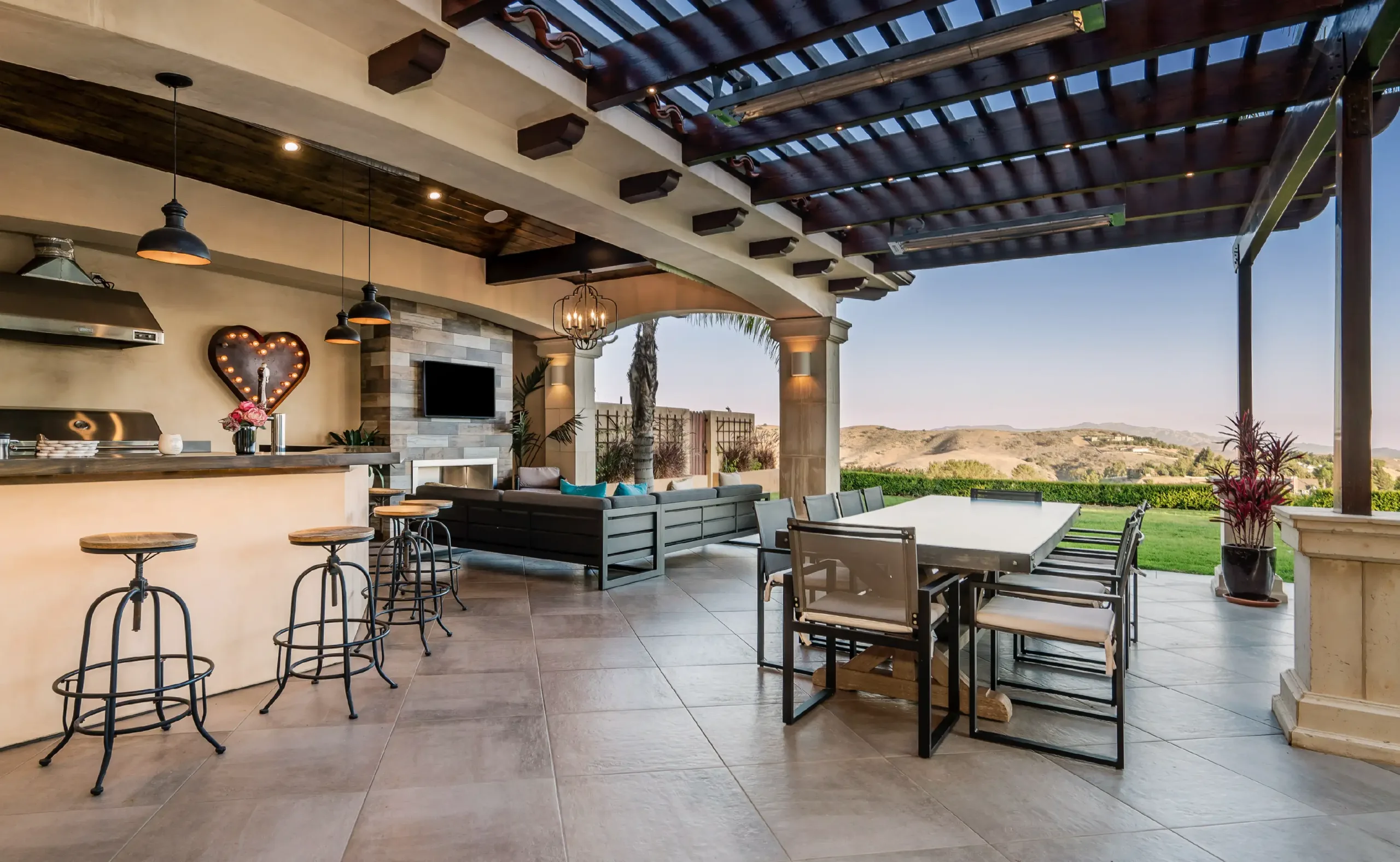
- Serving Zone: Bar or buffet area where guests can gather
Clear zones help your outdoor kitchen feel intuitive and efficient.
2. Consider Traffic Flow
Make sure walkways aren’t obstructed and transitions from patio or indoor doors are smooth. Your guests shouldn’t feel like they’re dodging stools or appliances as they socialize.
3. Think Through Utilities
Plan for electrical access, water lines, gas hookups, and drainage early in the design process. Running utilities after construction is expensive and disruptive, so map these needs well before building begins.
Choose Durable, Weather-Resistant Materials
Outdoor kitchens face sun, rain, wind, and fluctuating temperatures. Unlike indoor spaces, materials need to withstand weather without losing their charm.
Countertops
Consider surfaces like:
- Granite
- Concrete
- Tile
- Weatherproof synthetic stone
These materials resist staining, heat, and fading.
Cabinetry
Standard indoor cabinetry won’t hold up. Choose:
- Marine-grade polymer cabinets
- Stainless steel units
- Sealed composite materials
These options avoid warping and corrosion.
Flooring
Your outdoor kitchen flooring should be slip-resistant and easy to clean. Popular choices include:
- Pavers
- Stamped concrete
- Natural stone
Avoid plush outdoor rugs in the cooking zone, as they trap grease and create hazards.
Select the Right Appliances
Your choice of appliances defines how you cook and entertain outdoors.
Grills
High-quality gas or charcoal grills are the centerpiece of many outdoor kitchens in the Bay Area. Some homeowners even install dual-fuel systems to enjoy both gas convenience and charcoal flavor.
Pizza Ovens
Wood-fired or gas-powered pizza ovens add flair and functionality, turning dinner into an experience.
Side Burners and Smokers
Add a side burner for sauces and sides, and a smoker for low-and-slow BBQ — perfect for enthusiastic home chefs.
Refrigeration
Outdoor-rated refrigerators keep beverages chilled and ingredients close at hand. Avoid indoor models, which aren’t built for outdoor humidity and temperature swings.
Lighting and Comfort Features That Extend Use
A beautiful outdoor kitchen isn’t just about cooking; it’s about atmosphere and comfort.
Layered Lighting Design
Combine:
- Task lighting (over prep areas)
- Ambient lighting (string lights, lanterns)
- Accent lighting (under-counter LED strips)
This layered approach keeps your outdoor space usable day and night.
Shade and Shelter
Install pergolas, shade sails, or retractable awnings to protect from sun and light rain. Consider fans or misting systems for hot summer days.
Heating
Extend your outdoor season with patio heaters, fire pits, or built-in fireplaces.
Style That Reflects Your Home and Taste
Your outdoor kitchen should feel cohesive with your home’s architecture and your personal aesthetic.
- Modern minimalist: Sleek lines, monochrome countertops, stainless steel appliances
- Rustic charm: Natural stone, wood accents, lantern lighting
- Mediterranean vibe: Warm terracotta, mosaic tiles, wrought iron details
- Farmhouse feel: Whitewashed surfaces, butcher block prep areas, farmhouse sink
Mix and match elements to create a space that feels uniquely yours.
Storage and Practical Considerations
Adequate storage is vital in keeping your outdoor kitchen organized. Include:
- Weather-proof cabinets
- Drawers for utensils and tools
- Shelves for dinnerware and serveware
- Trash and recycling pull-outs
If you frequently grill, consider specialized racks for spices, sauces, and grilling tools.
Wrap-Up: Designing a Space You’ll Love
Designing a functional and stylish outdoor kitchen in Danville CA is about blending practical workflow with inviting design. When planned thoughtfully, the result becomes much more than a cooking area — it’s a destination for memories, meals, and gatherings.